The octopus has three hearts and blue blood
Beneath those eight arms lies a body designed on an entirely different logic from ours.
Also available in:Ελληνικά
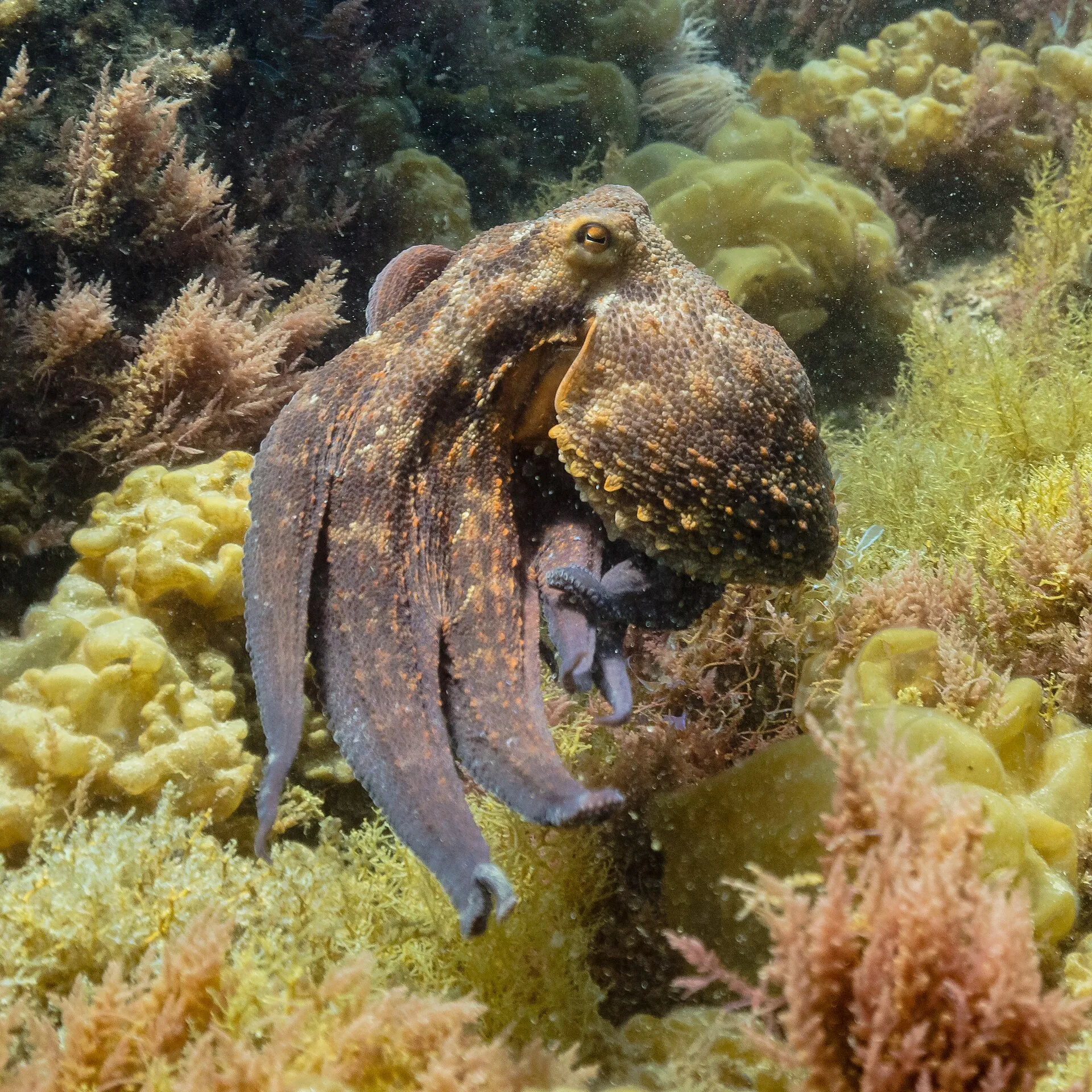
We have one heart, red blood and a brain that makes almost every decision. The octopus has three hearts, blue blood and arms that do much of the work on their own.
Three hearts, three jobs
Two small hearts, the branchial hearts, pump blood through the gills, where it picks up oxygen. The third, the systemic heart, sends it to the rest of the body. It's the same job the four chambers of our own heart do, split across three organs.
Measurements in free-moving octopuses showed that when the animal swims by jet propulsion, that is, by shooting out water, flow from the main heart briefly stops. That's why octopuses usually prefer to crawl along the seabed: swimming tires them out faster.
Why blue?
Our blood carries oxygen using haemoglobin, which contains iron and is red. The octopus uses haemocyanin, a copper-based protein. When it binds oxygen, it turns bluish. Unlike haemoglobin, it isn't held inside cells but floats freely in the blood.
In a 2015 study, an Antarctic octopus had about 40% more haemocyanin than related warm-water species, and its haemocyanin kept carrying oxygen at close to 0 °C.
Arms that "think"?
Each arm has its own nerve network and can taste, grasp and react with a great deal of local processing. But scientists don't say the octopus has "nine brains". The brain sets the direction, and the arms handle the details of the movement.
What we really know
The three hearts and haemocyanin have been known for a long time. Why flow from the main heart briefly stops during swimming, and how autonomous the arms really are, are still open areas of research. That's why we keep measurements separate from metaphors.
Photo: Diego Delso, Wikimedia Commons, CC BY-SA 4.0.
Sources & references
- Blood flow and pressure changes in exercising octopuses (Octopus vulgaris) — Journal of Experimental Biology (Wells κ.ά.), 1987
- Blue blood on ice: modulated blood oxygen transport facilitates cold compensation and eurythermy in an Antarctic octopod — Frontiers in Zoology (Oellermann κ.ά.), 2015
- An embodied view of octopus neurobiology — Current Biology (Hochner), 2012
Did you know?
Your answer stays on this device only.